Homeowner Guide

Comparison

Polyaspartic vs epoxy, from a crew that installs both

This is the most common question we get at walkthroughs, usually because a franchise pitched one as miraculous and the internet pitched the other as identical-but-cheaper. Neither is true. We install both — often on the same floor — so here is the honest comparison, including the part most articles skip: the premium garage floor most companies actually sell you is the two of them working together.

The short version

EpoxyPolyaspartic
Cure to walkable24–48 hoursHours — same day
UV stabilityAmbers in sunlightColorfast, no yellowing
Application windowSlab must be warm (50–90°F)Tolerates colder slabs — longer Idaho season
Build thicknessThick, high-build base coatsThinner, harder wear coats
Abrasion resistanceGoodExcellent — hardest surface we install
CostLowerHigher per square foot
Best roleBase and build coats, metallicsTopcoats, fast turnarounds, exterior and UV

Where epoxy wins

Epoxy is the workhorse: it builds thickness, wets deep into properly ground concrete, tolerates repairs and self-levels small imperfections. It is also the only chemistry for the deep, glassy metallic floors people photograph. And it costs meaningfully less per square foot, which matters across a big slab.

Its two real weaknesses: it cures slowly, and sunlight slowly ambers it. In a closed, north-facing garage neither may ever matter.

Where polyaspartic wins

Speed, sunlight and wear. A polyaspartic floor takes foot traffic the same evening — for a working shop or a one-day residential install, that is the whole decision. It never yellows, which makes it mandatory near glass doors, on exterior concrete and anywhere the sun reaches. And its cured surface is harder-wearing than epoxy under wheels and dragged steel.

The trade-offs: higher material cost, thinner per-coat build, and a fast cure that punishes sloppy crews — there is no fixing a mistake tomorrow. It is an unforgiving product installed well or a mess installed badly.

The hybrid system most premium floors actually are

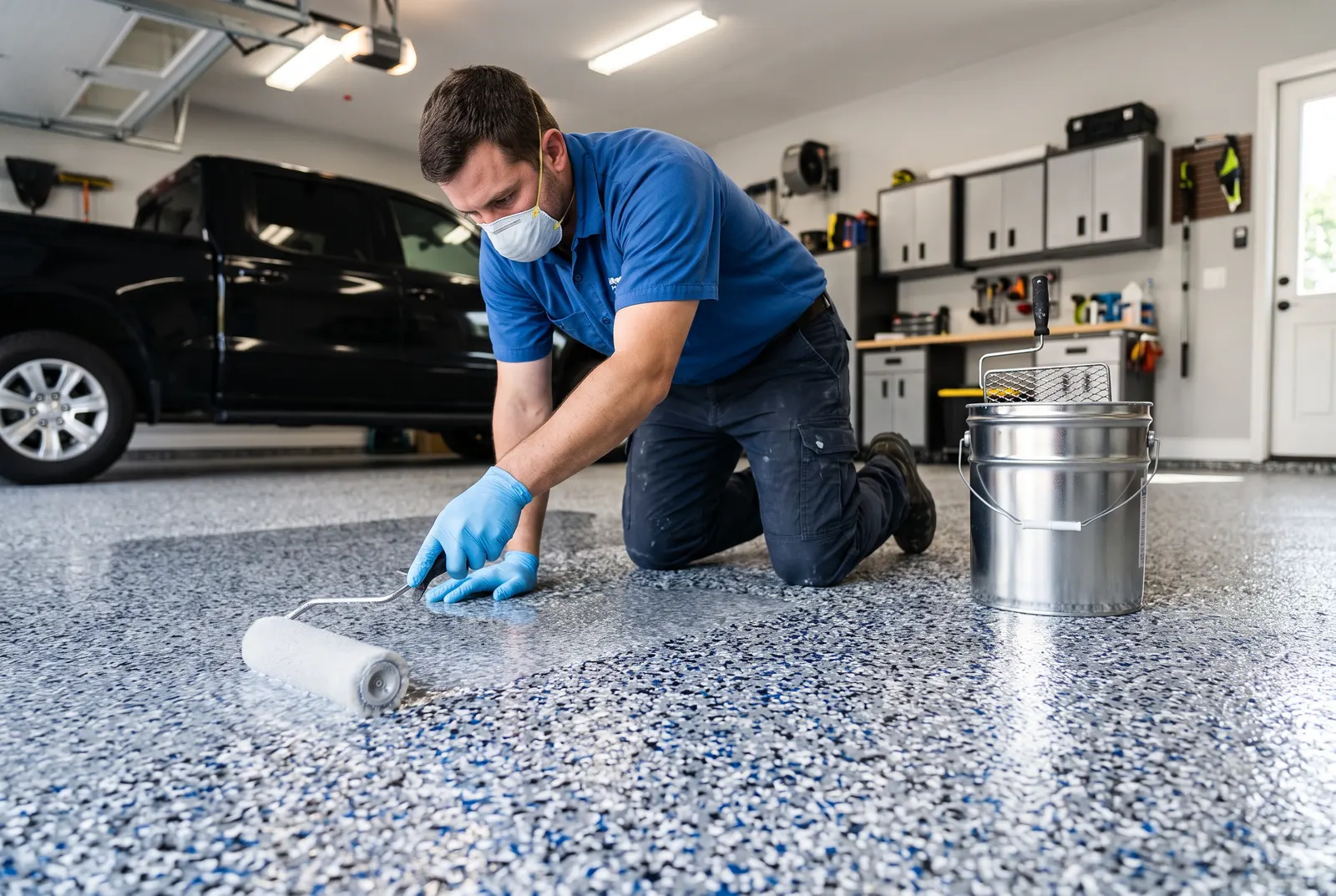
Walk into most well-specced garage floors installed in the last few years and you are standing on both: an epoxy base coat for adhesion and build, a full flake broadcast, and a polyaspartic topcoat for wear and UV. Each chemistry doing the one job it is best at.

That is our default premium system too. The pure versions still have their place — all-epoxy where budget leads and sun never enters, all-polyaspartic where the floor must be back in service tomorrow — but if you only remember one thing from this page: the question is usually not which one, it is which one on top.

And what about polyurea?

Marketing muddies this one: polyaspartic IS a polyurea — a refined subtype engineered for a workable cure window and UV stability. When a franchise says "polyurea, not epoxy!", they are describing the same family of topcoat chemistry we install as polyaspartic. Judge the spec sheet — prep method, mil build, topcoat chemistry — not the brand name for it.

Quick Answers

The short versions.

Which is better for a garage floor, polyaspartic or epoxy?

For most garages the honest answer is both: an epoxy base for adhesion and build with a polyaspartic topcoat for wear and UV. Pure epoxy wins on budget in low-sun, low-urgency garages; pure polyaspartic wins when the floor must be usable the same day.

How much more does polyaspartic cost than epoxy?

As a full system it is the more premium option per square foot. As a topcoat on the hybrid system, the premium is smaller — and it buys UV stability plus a much harder wear surface. We quote both when it is a close call, itemized, so you can see the difference for your floor.

Is polyaspartic the same as polyurea?

Polyaspartic is a type of polyurea — a version engineered to cure at an installable pace and hold color in sunlight. Companies advertising "pure polyurea" floors are selling the same chemistry family, so compare prep and thickness specs, not trademarks.

The Services This Covers

Ready for the real thing?

Want the exact number for your floor?

Free walkthrough, moisture check, and a written itemized quote — the ranges above become one real number for your slab.