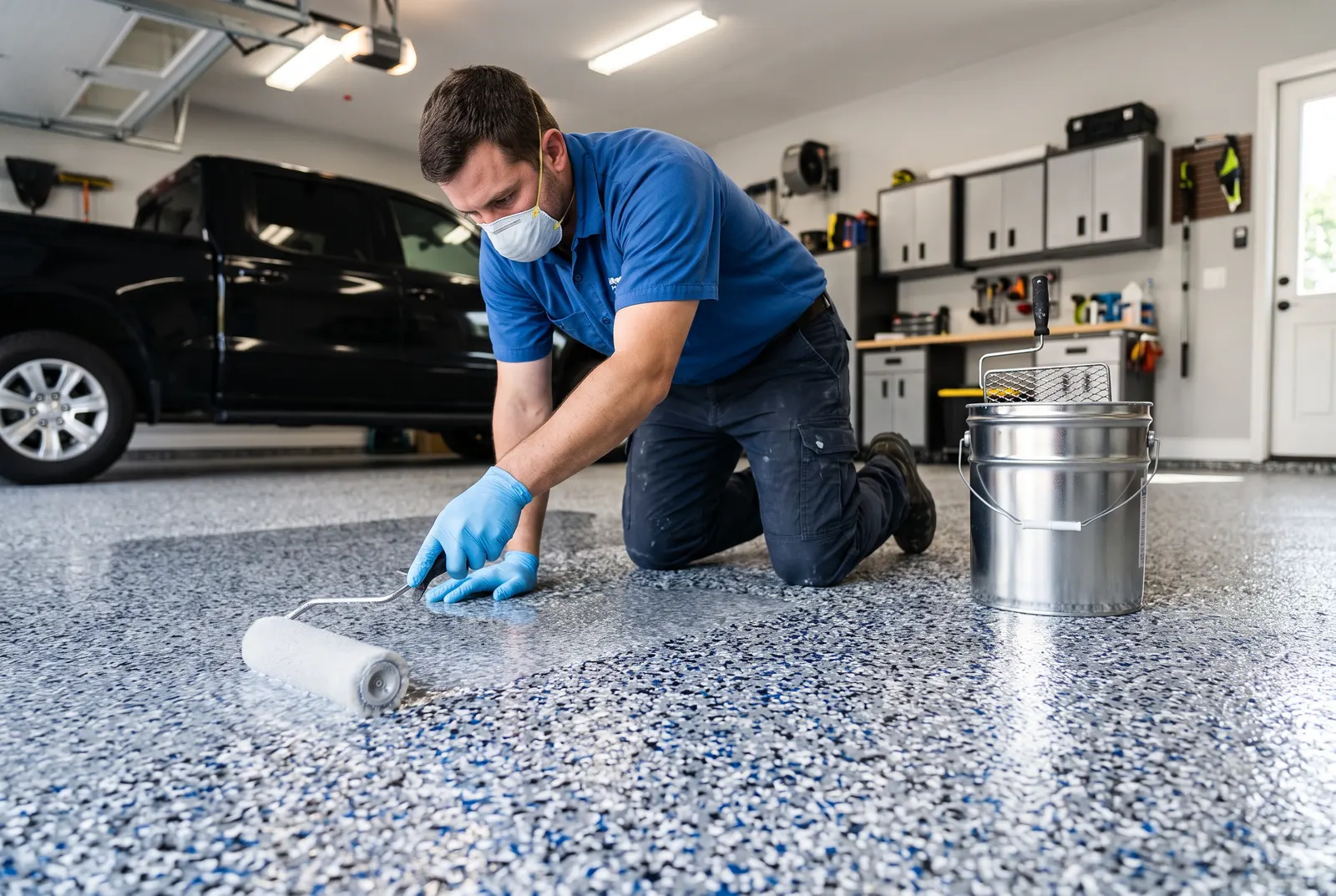
Same diamond-ground prep
Fast cure does not excuse bad prep. The slab is ground, repaired and moisture-checked exactly like an epoxy install.
Polyaspartic
Polyaspartic is the coating we reach for when the floor cannot be out of service for long, when sunlight hits the slab, or when the calendar says epoxy season is over. It cures in hours instead of days, never yellows in UV, and takes abrasion better than standard epoxy. We install it as a topcoat over an epoxy base — the hybrid system most premium garage floors actually are — or as a full polyaspartic build when speed is everything.
What You Get
Fast cure does not excuse bad prep. The slab is ground, repaired and moisture-checked exactly like an epoxy install.
The hybrid stack gives epoxy adhesion and build with a polyaspartic wear surface. A full-poly system trades some build for a one-day turnaround.
Epoxy ambers where sun hits it. Polyaspartic does not, which is why it is the only topcoat we put near glass doors, shop windows and exterior slabs.
Polyaspartic tolerates colder slabs than epoxy, which stretches the Idaho coating season at both ends instead of ending it in October.
Why It Matters
Speed: a garage that would be off-limits for three days under epoxy is back to foot traffic the same evening under polyaspartic — the difference matters for shops that cannot close.
Sunlight: south-facing garage doors, showrooms and anywhere glass meets slab. Epoxy under UV slowly ambers; polyaspartic holds its color for the life of the floor.
Abrasion: forklift wheels, floor jacks and dragged toolboxes wear through lesser topcoats. Polyaspartic is the hardest wear surface we install.
Polyaspartic costs more per square foot than epoxy — and is worth it in specific situations, not all of them. The comparison guide lays out exactly which.
Recent Work
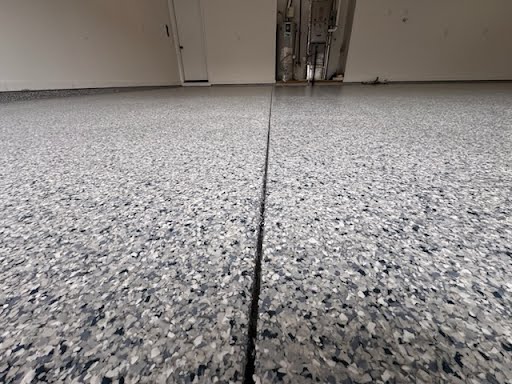
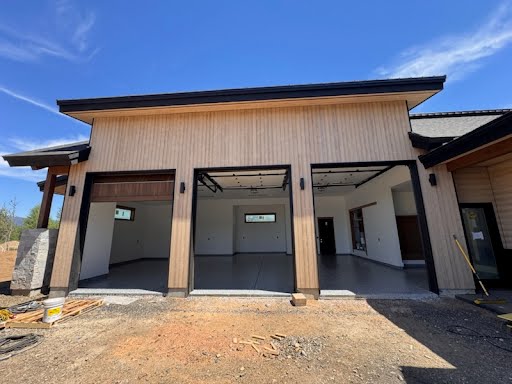
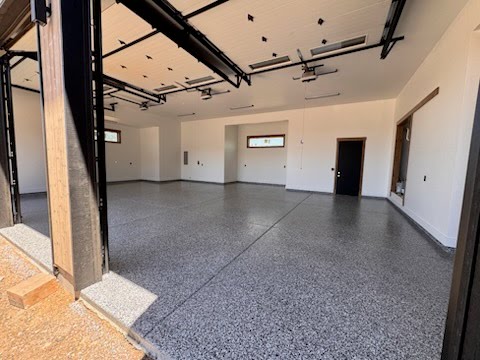
Where We Install It
Questions
Epoxy cures slowly into a thick, hard build coat; polyaspartic cures fast into a thinner, harder, UV-stable wear coat. They are not rivals so much as teammates — our standard premium floor is an epoxy base with a polyaspartic top. The full comparison is in our polyaspartic vs epoxy guide.
Gloss looks slick but the flake broadcast adds real texture, and we can add grip additive to any topcoat. For wet areas — entries, exterior slabs — we spec the texture up rather than hoping.
If you need the floor back fast, have sun on the slab, or run equipment across it — yes, clearly. For a low-traffic storage garage a standard epoxy system does the job for less. We quote both when it is a close call.
Other Systems